Role
Research-led Product/UX Designer
Platforms
iOS / Android
Timeline
12.2024–04.2025
Status
lo-fi Prototype
Outcome
Turn the start into a choice — without breaking the Plan → Mission path.
Core loop:
Plan → Grocery → Mission
Summary:
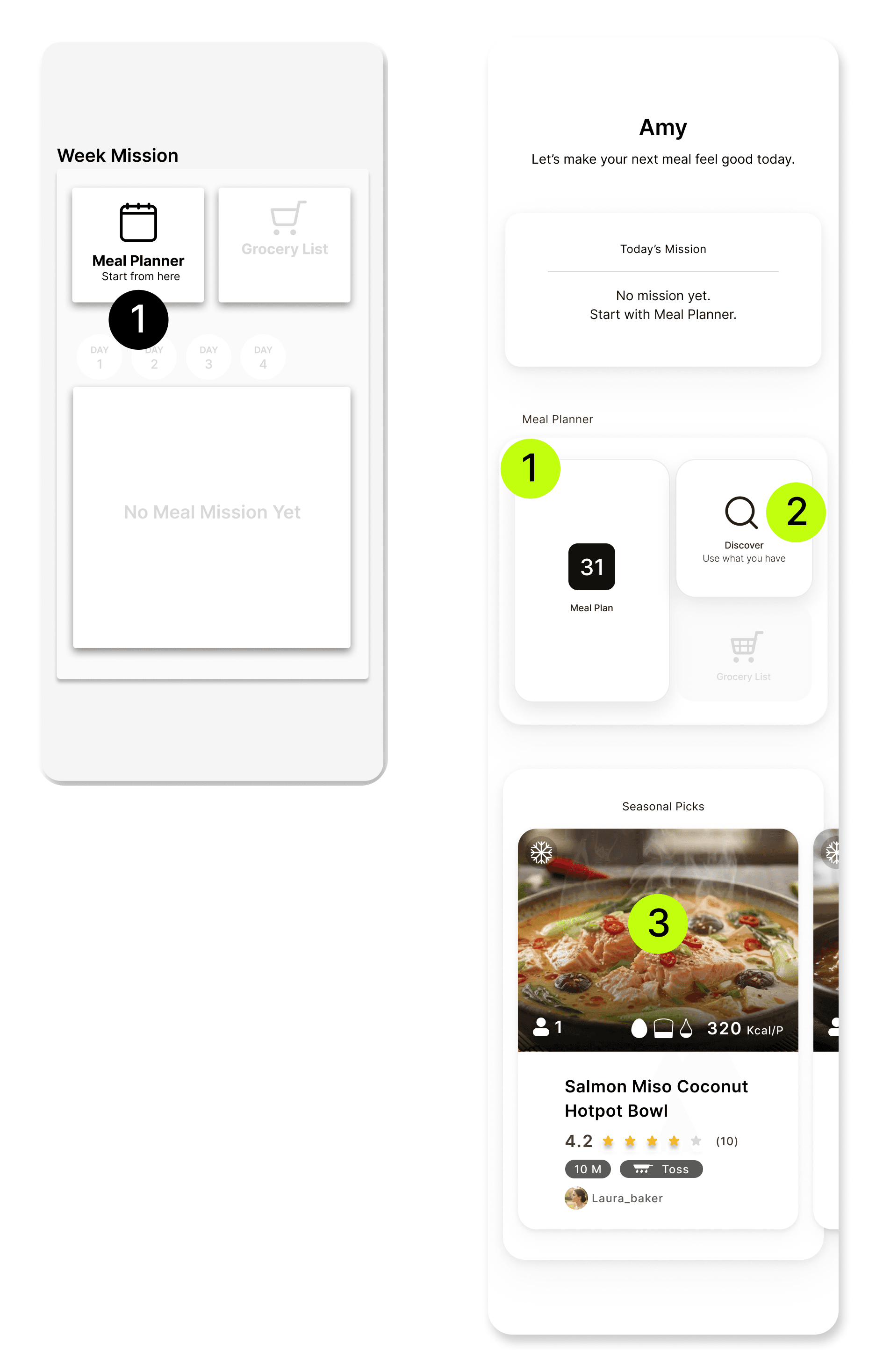
Home shifted from “the app’s start” to “my start” with multiple entry points — Meal Planner stayed primary as the anchor.
One-line principle:
Design for agency, not compliance.
The tension
Users followed the flow but didn’t feel in control.
Home implied one “correct” start: Meal Plan → Grocery → Mission. Users could follow it — but didn’t feel in control of where to begin. Mission is where planning becomes an actionable weekly commitment.
Focus:
This wasn’t usability. It was buy-in and perceived control at the start.
Small note
* Prototype test (n=5), moderated. *“Pause” = ≥3s before primary CTA.
Decision → Design Move
Drop the “one right start.” Keep one anchor. Add multiple valid entries.
Considerations:
Trade-off:
Less “sequenced guidance,” more room to explore.
Risk:
Users might browse recipes and never commit to a Mission.
Decision:
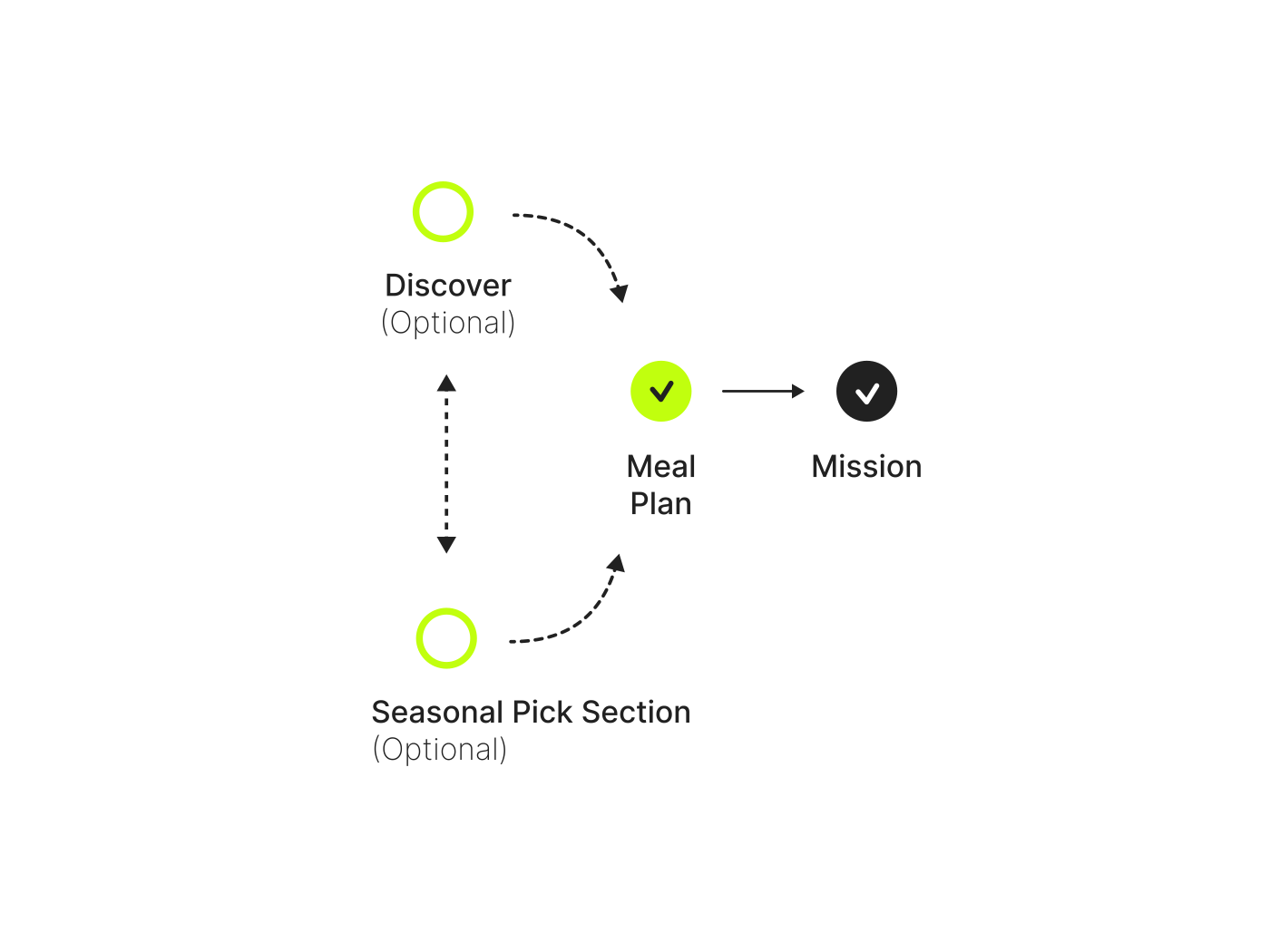
Keep Meal Planner as the core valve, add multiple valid starts into it.
Guardrail:
Meal Planner stayed the anchor. Exploration still led back to the loop.
Impact
Autonomy increased while mission entry stayed intact.
Interpretation:
Choice removed the “being controlled” friction without breaking the product’s core sequence.
Next tension:
Exploration was easier. Starting a Mission still needed its own design. (→ Case 3)
Small note
Autonomy surfaced unprompted → I added a one-question follow-up across sessions.
Next
Disclaimer
This MVP planning is simulated and grounded in my UX process.
Takeaways
• Design for agency, not compliance.
• A hub works when entries converge.
• Prototype signals are real — but method bias matters.
So what
Home isn’t just navigation — it sets the emotional tone for the habit.
Bridge to Case 3
Case Study 2 - Evidence pack
Optional deep dive below.
Deep Dive